



What We’re Offering
Why you Should Choose Our Services
We have the best experts to elevate your business to the next level, try is and you will see!
- Take a professional approach
- Provide unhindered support 24/7
- Offer full-cycle IP Phone Services
- We take our job seriously
- Our team is qualified
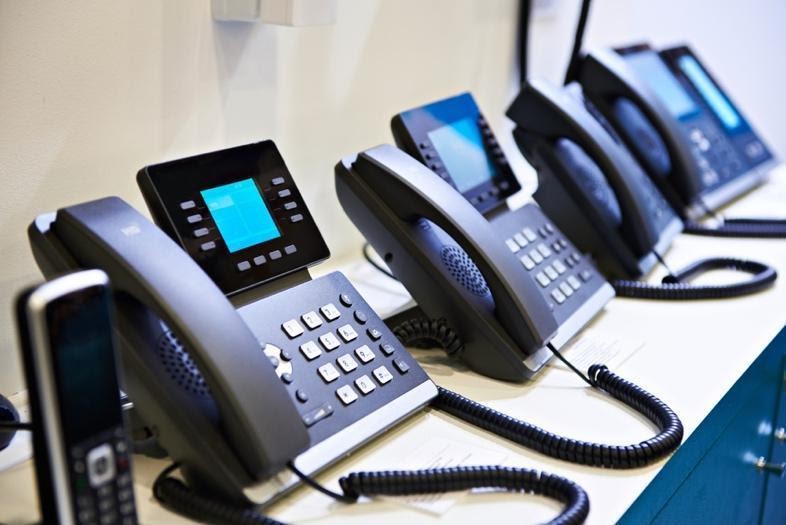
Get to Know IP Phone
What is IP Telephone?
Organise your business calls the smarter way
Internet Protocol telephone or IP telephone is a term used to describe technologies that use a variety of protocols to exchange voice, fax, and other forms of information. This was traditionally carried over Public Switched Telephone Networks (PSTNs).
However, IP became the primary mode of transportation for almost all data communication since the 1990s and today, all communication carriers are using an IP infrastructure for most of their voice services. That’s because the benefits of IP telephony in corporate environments are numerous and mainly related to infrastructure and reduced phone bills.
IP telephony has brought in the development of unified communications solutions that provide a complete communications package, on one platform and a single network. Which means, businesses can easily manage calls, chat, use video conferencing and collaborate, all through a single service. In short, it is a single network infrastructure that facilitates both voice and data solutions.

Get to Know IP Phone
How does IP Telephony work?
Internet telephony is a communication option in which the internet is used to transmit telephone calls, either from one computer to another, from a computer to a traditional telephone set, or from one telephone device to another. In other words, IP phones use the internet to make and receive calls. IP phones work by reading an individual’s analogue voice signals, which means, when a caller speaks into the microphone, his voice is converted into data and the computer reads that data just like any other data sent over the internet. This data too is converted into digital signals and sent through a broadband connection. Basically, IP phones use a protocol known as VoIP (Voice Over Internet Protocol) and the entire process takes a fraction of a second. At the receiving end, however, it’s the reverse process. Each data packet is then reassembled into data compatible with the receiving machine which demodulates the data and converts it back into voice signals, for the receiver to understand. However, the final step in this process depends on whether the receiver is using a telephone system or computer. If it’s a telephone, then a gateway device is used to complete the demodulation process, whereas if it’s a computer, the sound can be heard via headphones or attached speakers. In short, here the system uses IP and local area network (LAN) to transmit the calls and other information in place of the traditional phone line and phone network.
What We’re Offering to Our Clients
Awantech Providing you the Best Solutions
Cloud PBX
Help protect organizations against data loss.
On Prem PBX
Research and evaluate business, audience & competitors.
Call Center
Programmed software products to meet business goals.
Technology Path
Trusted IT Solution & Service Business Agency
Experienced
20 years of experience
Convenience
Support any time 24/7
Professional
Take our job seriously


Newsletter
Signup for our latest news & articles. We won’t give you spam mails.
- © Copyright 2025 by AWANTECH ENTERPRISE